

Rubber Machinery Certifications Explained: ISO 9001, CE Marking, and China's "Little Giant" Status
Rubber Machinery Certifications Explained: ISO 9001, CE Marking, and China's "Little Giant" Status
A certification is a third-party statement that a manufacturer's process, product, or technical capability has been measured against a defined standard — and for machinery buyers, it is the fastest available proxy for whether a factory can hold tolerances on the tenth machine the way it did on the first.
For rubber processing equipment, four credentials come up most often in supplier evaluation: ISO 9001 for quality management, CE marking for machinery sold into the European Economic Area, and two Chinese government designations — National High-Tech Enterprise and the Specialized, Refined, Differentiated and Innovative "Little Giant" enterprise program. Each one answers a different question, and none of them replaces a factory audit.
This page explains what each credential actually means, what it does and does not prove, and how to verify it before you place an order.
What each credential actually measures
ISO 9001: process consistency
ISO 9001 is not a product standard. It certifies that a manufacturer runs a documented quality management system: how designs are reviewed, how suppliers are approved, how in-process inspection is recorded, how non-conforming parts are handled, and how corrective actions are closed out.
For a buyer of an internal mixer or a calender, the practical value is traceability. A factory operating under ISO 9001 should be able to show you the inspection record for your machine's rotor, the material certificates for its chamber body, and the test data from its run-in — not because the standard demands those specific documents, but because the system requires records to exist and be retrievable.
What it does not do is guarantee mixing performance. Two ISO 9001 factories can build machines with very different dispersion results. ISO 9001 tells you the factory is disciplined; the test run tells you whether the machine is right.
CE marking: legal access, not a quality badge
CE marking is a declaration that a machine conforms to the applicable EU directives — for most rubber processing machinery, the Machinery Directive, along with the EMC and Low Voltage Directives where relevant. The manufacturer issues a Declaration of Conformity and assembles a technical file covering risk assessment, guarding, emergency stop design, electrical safety, and the information for use.
Two things buyers routinely get wrong. First, CE is self-declared for most machinery categories, so the mark alone does not mean an independent body tested the machine — the technical file is what carries the weight. Second, CE covers safety and legal market access, not process capability: a CE-marked mixer can still be the wrong mixer for a silica compound.
If you are buying for an EU plant, ask for the Declaration of Conformity and confirm the directive references and the machine's serial range. That is the document an inspector will ask for.
National High-Tech Enterprise: R&D substance
China's National High-Tech Enterprise designation is granted after review of R&D expenditure as a share of revenue, the proportion of technical staff, and ownership of core intellectual property in a designated high-tech field. It is renewed periodically, not granted permanently.
For a machinery buyer, this is a signal about engineering depth rather than build quality. A company that qualifies is spending real money on development and holds its own IP — which matters when you need a modified rotor profile, a non-standard discharge, or a line integration that is not in the catalogue.
"Little Giant" (SRDI): depth in a narrow segment
The Specialized, Refined, Differentiated and Innovative "Little Giant" program identifies small and medium enterprises that hold a leading position in a specific market niche, with criteria spanning specialization, innovation, and market share in their segment.
The useful reading for buyers is focus. These are not conglomerates spreading across ten industries; they are firms that have gone deep in one product family. For equipment where process know-how is concentrated in a narrow field — internal mixing being a clear example — that focus is often worth more than the balance sheet size of a larger generalist.
Certifications are a filter, not a decision
Credentials narrow the supplier list. They do not close it. Before ordering, verify:
- Certificate number, issuing body, and validity date — an expired or suspended certificate is a common finding.
- Scope of certification — does it cover the product you are buying, at the site that will build it?
- Site address match — group-level certificates sometimes do not cover the specific workshop.
- CE technical file and Declaration of Conformity — request them, do not accept a logo on a brochure.
- A witnessed test run — the only evidence that speaks directly to your compound.
Huahan's credentials
Huahan is a rubber and plastic machinery manufacturer founded in Zhuanghe, Dalian, China in 1986. The company holds ISO 9001 quality management system certification and CE marking for machinery supplied to European markets, and has been designated a National High-Tech Enterprise and a Specialized, Refined, Differentiated and Innovative "Little Giant" enterprise.
Those credentials sit behind a product range that spans internal mixers, kneaders, calenders, extruders, batch-off cooling, and tire building and curing equipment — see the full product range, or the intermeshing type kneader as an example of the temperature-sensitive compounding work the company builds for. Customer references and export markets are listed on the partners page, and company milestones and awards appear in company news.
Buyers who need to close the loop should request the current certificate copies, the CE Declaration of Conformity for the specific model, and a factory visit — the documentation above is a starting filter, not a substitute for seeing the machine run.
FAQ
What certifications should a rubber machinery manufacturer have?At minimum, ISO 9001 for quality management and CE marking if the equipment will be installed in the EU. For Chinese suppliers, National High-Tech Enterprise and "Little Giant" designations are additional signals of R&D depth and niche focus, though neither replaces a factory audit or a witnessed test run.
Is CE marking required for rubber mixing machines sold in Europe?Yes. Rubber processing machinery falls under the EU Machinery Directive, so a CE mark and a Declaration of Conformity with an accompanying technical file are required to place the machine on the EU market legally.
Does ISO 9001 guarantee machine quality?No. ISO 9001 certifies that a documented quality management system is in place and audited. It indicates process discipline and traceability, but it does not certify the performance of a specific machine against your compound. A test run is the direct evidence.
What is a "Little Giant" enterprise in China?It is a national designation for specialized small and medium enterprises that hold a leading position in a defined market niche, assessed on specialization, innovation, and market share in their segment. It signals depth in a narrow field rather than overall company size.
How do I verify a supplier's certificate is genuine?Check the certificate number against the issuing body's public registry, confirm the validity date, confirm the certified scope covers the product and the manufacturing site, and ask for the CE Declaration of Conformity and technical file for the specific model.
Hot News

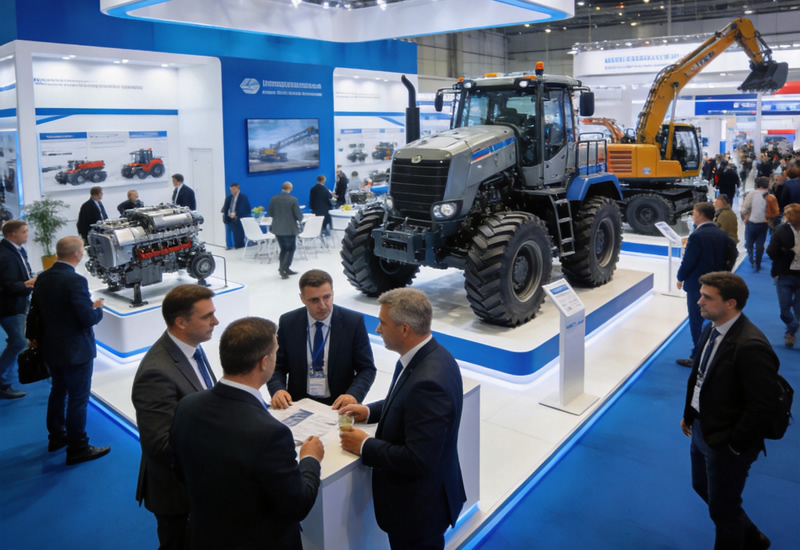
Huahan Showcases Complete Mixing Line Solutions at International Rubber Expo
Our booth presented the full rubber processing portfolio, drawing customers from tire groups and hose manufacturers across Europe, the Middle East and Southeast Asia.
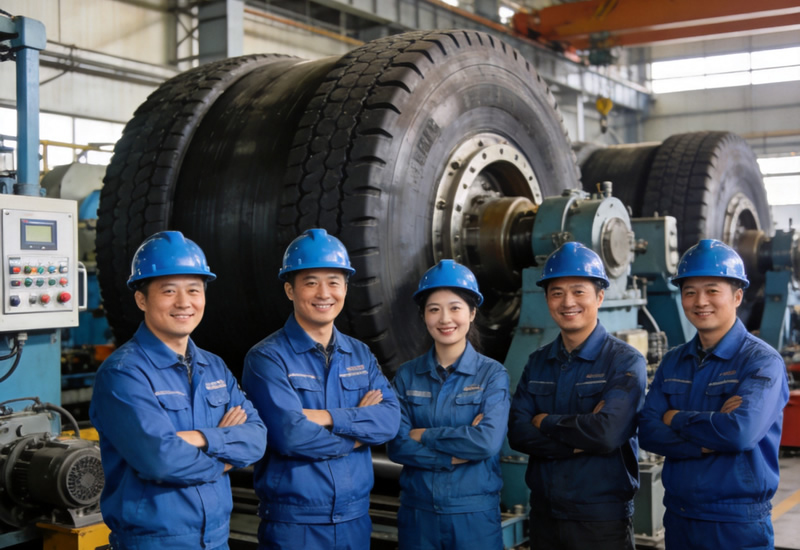
Read Article →Skilled Workforce and R&D Team Continues to Grow
The Huahan team now exceeds 500 employees, including mechanical design, electrical control, process engineering and after-sales service groups.
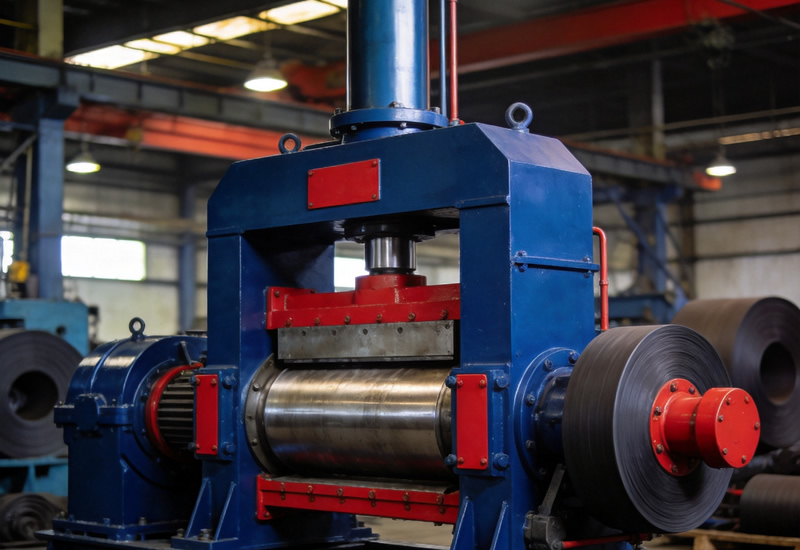
Read Article →New Intermeshing Kneader Technology Improves Dispersion Quality
Our engineering team introduced an upgraded intermeshing rotor design delivering more uniform filler dispersion and lower mixing temperatures.
Read Article →

{item.title}
{item.description}
PLANNING A NEW RUBBER PRODUCTION LINE?
Send us your process requirements — our engineers will propose a tailored machine package within 24 hours.