

CATEGORIES
Four-roll calender
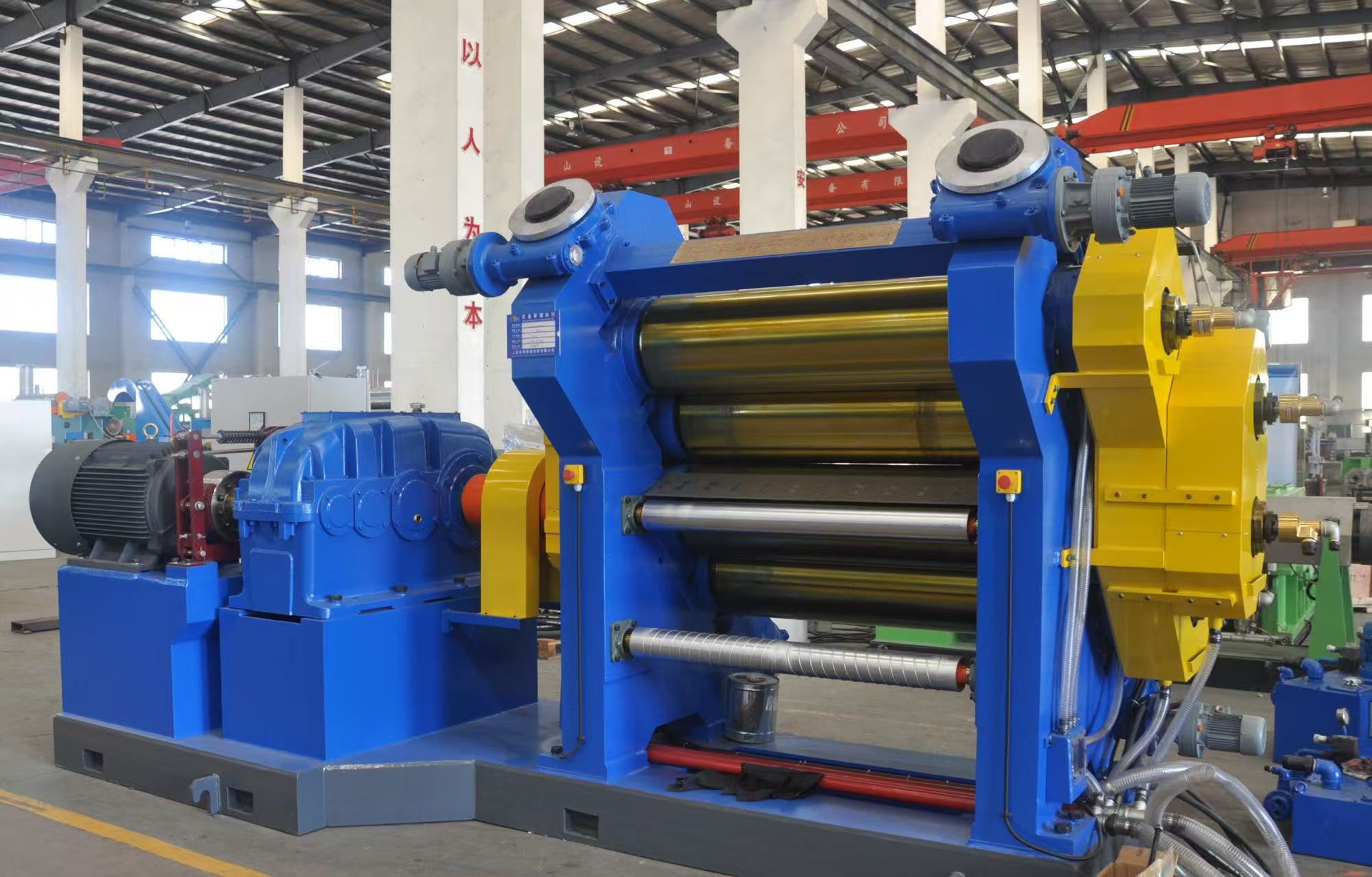
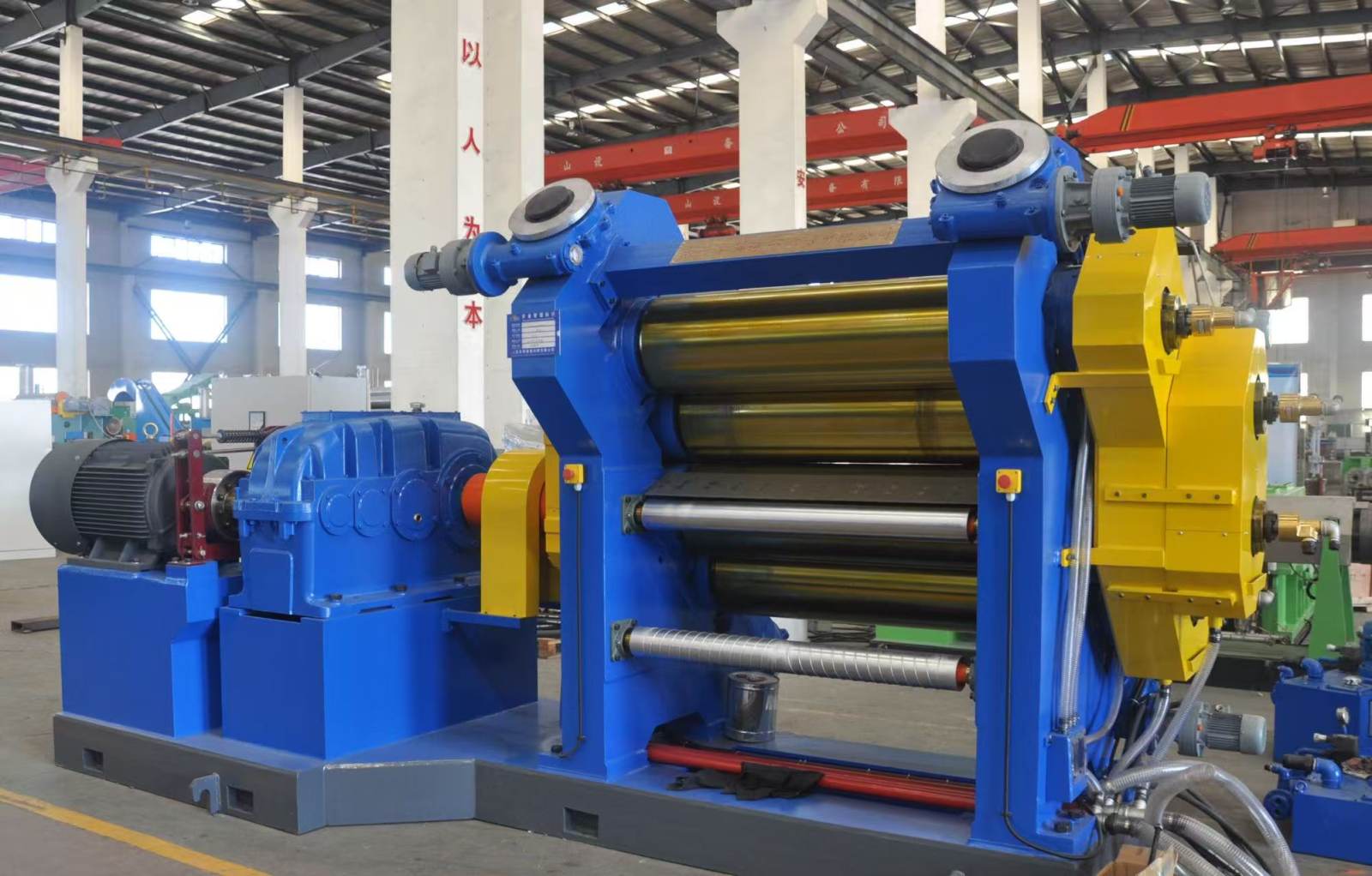
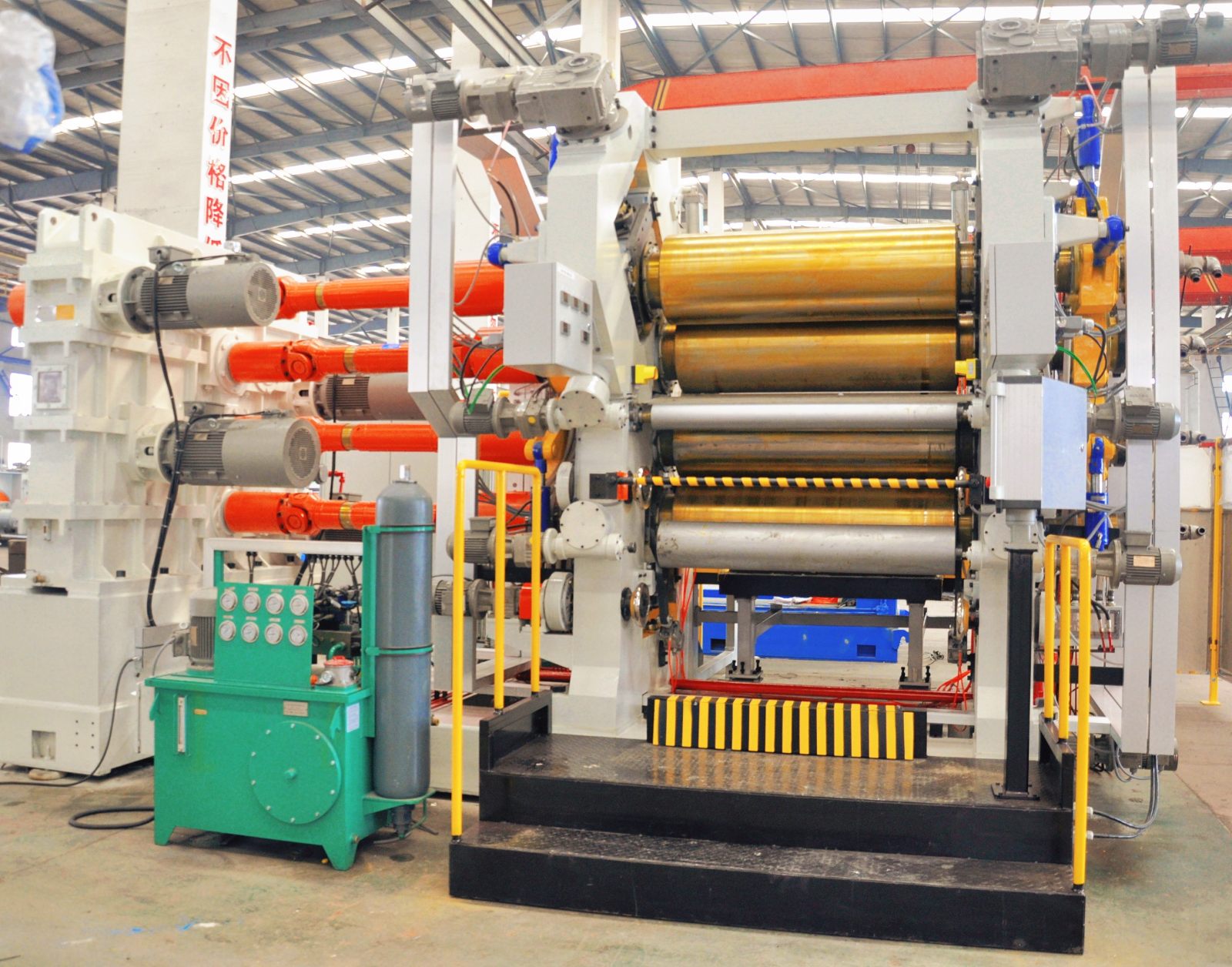
The four-roll calender is one of the core equipment in the rubber and plastics industry. It presses warmed rubber compound into uniform thin sheets through four relatively rotating rollers, or applies single-sided frictioning or double-sided coating on cord or canvas. It is used for the production of rubber products such as double-sided coating of cord/canvas for tires and conveyor belts, seals, and rubber sheets.
Product Features: It adopts four high-strength alloy chilled cast iron/forged alloy steel rollers. The roller surface temperature is adjusted by an automatic temperature control system. The roller spacing is automatically adjusted by a high-precision electric/hydraulic gap adjustment system. It is equipped with bearing clearance elimination and crown compensation devices.
Product Introduction
Four-roll calender
The four-roll calender is one of the core equipment in the rubber and plastics industry. It presses warmed rubber compound into uniform thin sheets through four relatively rotating rollers, or applies single-sided frictioning or double-sided coating on cord or canvas. It is used for the production of rubber products such as double-sided coating of cord/canvas for tires and conveyor belts, seals, and rubber sheets.
Product Features: It adopts four high-strength alloy chilled cast iron/forged alloy steel rollers. The roller surface temperature is adjusted by an automatic temperature control system. The roller spacing is automatically adjusted by a high-precision electric/hydraulic gap adjustment system. It is equipped with bearing clearance elimination and crown compensation devices.
Advantages:
High precision: Product thickness tolerance can be controlled within ±0.02mm;
High efficiency: Double-sided coating of cord/canvas is completed in one pass, with high capacity;
Multi-function: Capable of sheeting, coating, frictioning, laminating, etc., one machine with multiple functions;
Stable quality: Through the action of automatic crown compensation and clearance elimination devices, uniform and stable product thickness is ensured.
Four-roll calender
The four-roll calender is mainly used for calendering rubber sheets and for coating and frictioning textiles.
Features
The rubber calender is mainly composed of rollers, roller bearings, roller gap adjustment device, frame, roller temperature adjustment device, lubrication system, axis crossing, preloading, transmission system and control system.
1. Roller
The roller is the main component of the calender and is also the key component that determines the quality and output of calendered products. The roller is the part that directly completes the calendered product, and it directly affects the precision, quality and productivity of the calendered product. The working surface of the roller has very high wear resistance and good smoothness; the roller body has sufficient strength and rigidity, and good thermal conductivity.
1. Roller Material
The roller material of the calender generally adopts alloy chilled cast iron rollers with high surface hardness, added with rare metal alloys such as chromium, molybdenum or nickel.
Since the calendering process requirements are stricter than the mixing process requirements, the rollers have the following special requirements:
(1) The roller surface must be finished by grinding;
(2) The wall thickness of the working part of the roller should be uniform to avoid uneven heat transfer;
(3) The roller has sufficient rigidity and dimensional accuracy, and deformation should be small;
1.1 Roller Structure and Dimensions of Each Part
There are two types of roller structures for calenders, namely hollow rollers and drilled rollers. Due to the special characteristics of drilled rollers, high-precision calenders adopt drilled rollers.
The heating and cooling forms of drilled rollers are divided into single drilling and grouped drilling. Among them, the grouped drilling method accelerates the flow speed of steam and cooling water, resulting in good heat transfer effect.
The characteristics of drilled rollers are:
(1) The drilled roller has a large heat transfer area;
(2) The wall thickness of the working part of the roller is uniform, so the heat transfer is uniform;
(3) The cross-sectional area of the roller is large, and its rigidity has been greatly improved;
(4) The heat conduction of the roller is stable, the roller surface temperature is uniform, the temperature response is fast, and it is easy to realize automatic temperature control.
Main Technical Specification
Send An Inquiry
Recommended Products